



Birthrates in the West are declining not because of feminism, as some conservatives argue, but because of industrial development. The picture is clear: every developed nation suffers from lower birthrates when modernity emerges. An inverted economic order reshapes communities. Contemporary Europe demonstrates that feminism is ultimately inconsequential to this trend. The opposite is true: the more feminist countries in the West have higher birthrates.
Southern European nations, such as Spain, Greece, and Italy, rank lower in female employment and political participation than Northern European countries. Southern Europe is also more religious than France and Scandinavian countries. Yet southern European nations have significantly reduced birthrates than the more feminist countries in the north among the native population - not merely the immigrant one, as critics suggest. The map below illustrates this reality. Data from last year is roughly the same.
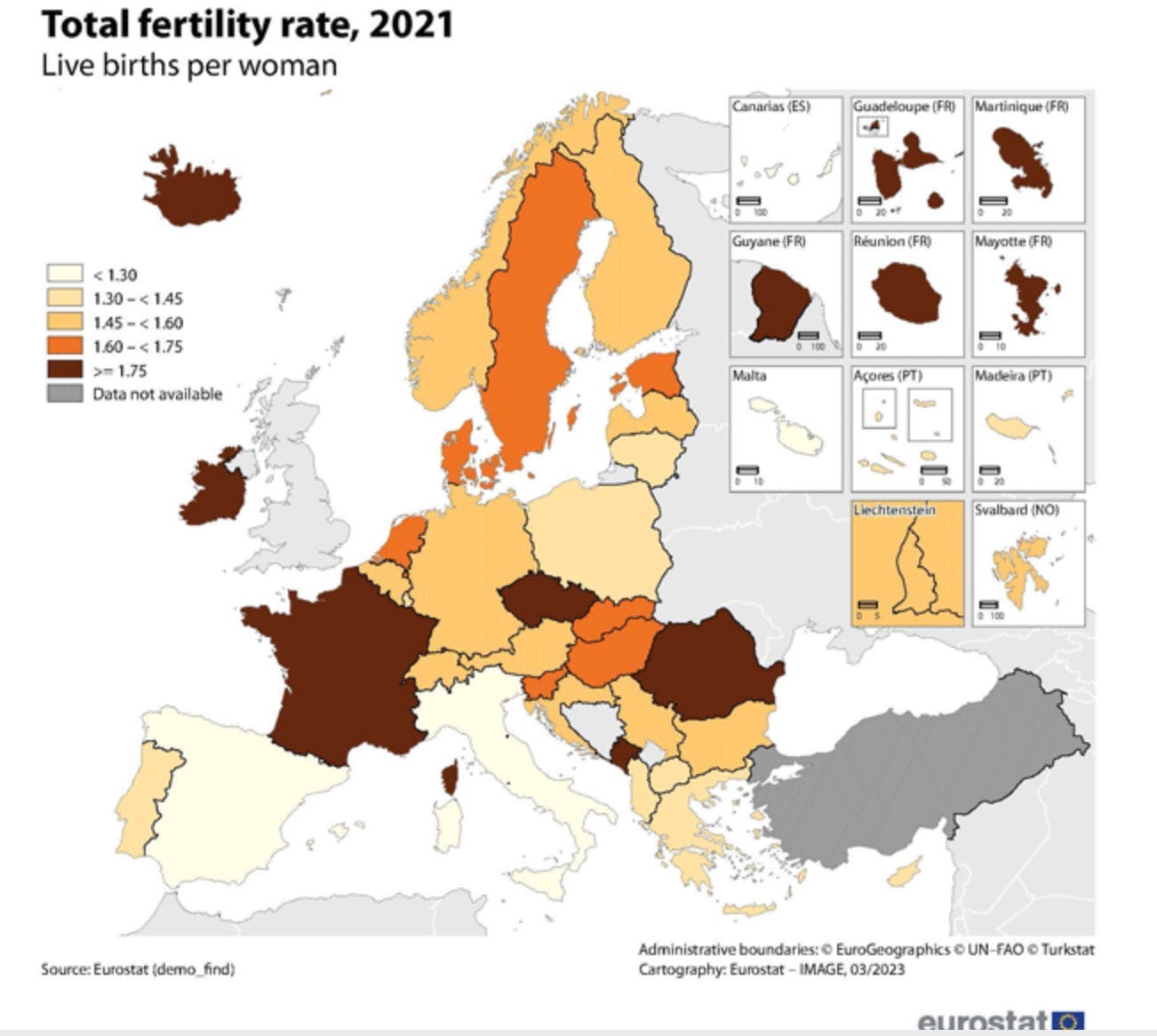
Southern European countries are largely poorer that their northern cousins and suffer more negative economic outcomes. Here we see a fatal mixture of economic deadlock, few opportunities and an inversely inter-generationally dependent society—new generations are increasingly dependent on older ones to survive.
In relation to the demographic crisis, we often hear: “People had children in far worse conditions” or “What about poor African countries with high birth rates?” The fundamental difference in the West is that whereas once children were an economic benefit to the family, they now represent a cost.
