

Reconnecting
The internet as real life

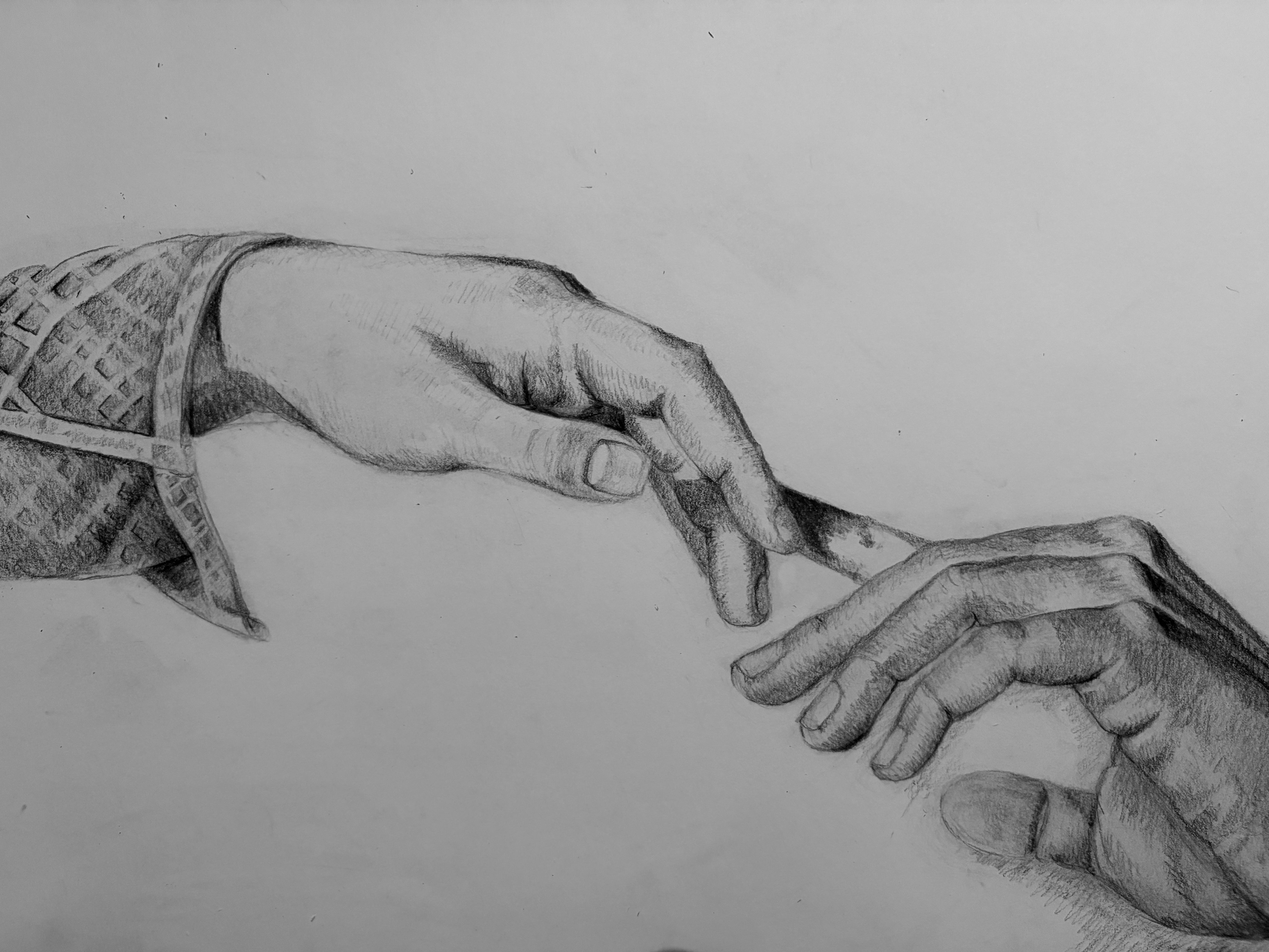
Pointing out that the virtual world has transformed our conception of connection is cliché. But how that online connection can be developed isn’t. It can inhibit or lay the grounds for us to build meaningful relationships. If we’re doom-scrolling half our days to distract ourselves, we’re more likely to feel not just isolated, but of no use to ourselves or others.
This feeling is growing now that both X and Instagram have dropped in content quality because of AI, so the first step for social media platforms to regain value would be to implement an AI filter, and a filter on the content we would like to see independently from the algorithm (instead of having to fight the algorithm by selecting what topics we don’t want to see). Substack has managed to implement the first option successfully, and that’s why users are flocking here. But regardless of company policies, the issue of virtual connection replacing real connection has been affecting us since the dawn of social media. I need to delve into a few, not-so-optimistic statistics and diagnoses on disconnection, before exploring the more optimistic outlook.
A recent Harvard study explored the epidemic of loneliness. To this day, almost a fourth of people report suffering from existential loneliness, which many times includes not having a friend to rely on. Others report having at least two close friends. If you have one truly close friend, you’re already above average for today’s standards. Not just because of the quantity, but the qualitative aspect: Real friends are hard to find. If not, know that you’re not an outlier. With remote working and self-employment, even the workplace can’t offer the connections we found in the pre-technological periods.
We’re entering an automated society where most labour-based jobs will be replaced. Both radical left and right-wing thinkers have analyzed how post-capitalism would inevitably lead to self-sufficiency, and therefore a necessary end to exploitative labor. Aaron Bastani, a British socialist journalist, explored in his book, Fully Automated Luxury Communism, how AI would lead to excessive abundance and therefore a communist utopia. A similar diagnosis was developed by reactionary political theorist Nick Land in The Dark Enlightenment, but he concluded that we should accelerate into capitalism so that its dissolution would bring new, functional anti-democratic systems of government. I would disagree with the idea that this world of independent automation will produce utopian communism or organic city-states; in my view, it will create a society of content creators who will assemble around their interests, and another competition-based hierarchy will naturally result from it. But the diagnosis here is important because technology and automation have created a post-scarcity society through self-reliance. As a result, we’re no longer motivated by the necessity of labor, and with modern tools making us less inclined to seek support from others, we become more alone. However, this solitude isn’t sustainable.
We’re reaching a turning point regarding human connection that deserves more attention, not least because we’re not surviving as a civilization. The relationship arena is substantially affected by this radical transition into automation. Most individuals in the West are no longer having children because they are becoming unaffordable due to inflation and rising costs of living. Children were once needed for labor, and they added to the economic output of the family; today, the opposite is true because labor is no longer needed, and men and women don’t need each other to survive, either. Romantic connection and creating a family are becoming an intentional choice, even a sacrifice. Only 59 percent of men are married by age 35-39, a stark decrease from our parents’ generation. By 2030, 45 percent of women are projected to be single and childless between the ages of 25-45 (the same or similar numbers apply to men). And what makes these statistics more concerning is that these conditions exist without the previous support system of an extended family, a broader community, or a workplace to alleviate the solitude, so instead, we resort to social media.
The basic question we can ask ourselves, instead of delving too much into analyses of the causes and symptoms, is: How do we reconnect?
Carl Jung said,
What you resist, persists.
We can embrace the lessons this loneliness is teaching us instead of avoiding them through quick dopamine hits that only exacerbate the very condition we’re attempting to overcome. We imagine ourselves to be less lonely because of virtual connections, which make our isolation more tolerable. But they still aren’t materializing into real life, and connection isn’t just based on a virtual, unseen reality, but of human touch in the flesh.
Many blame the rise of the internet for a lack of real-world connection. We’re not as prone to meeting in person because that virtual communication acts as a soft replacement. Sending a reel feels easier than organizing a gathering with our friends, and watching a live-stream makes us feel like we’re participating in a meaningful cause. But we aren’t; that virtual consumption is providing us with the illusion of connection, leading us to inertia.
Transitional periods inevitably create a “limbo feeling”, a purgatory of sorts; still physically living in the old world of connecting through pre-ordained relationships: class, family introductions, friend-groups, educational or professional institutions, and not yet in the new world of connecting spontaneously through the internet by shared interests and values (though not with dating apps, I’ll get into that soon). However, if we use the internet to create communities in real life, we may find the answer that we’re looking for. Currently, we’re afraid to accelerate into the new and unknown. But this merely delays the inevitable while making us feel nostalgic about a past that we cannot recreate.
In such times of solitude, loneliness can offer individuals an opportunity: To analyze oneself, or better, in this case, to analyze ourselves. Being alone can be transformative because it forces us to turn our gaze inwards. Inevitably, from one scroll to another, we are confronted with the question: What am I doing? What are we doing?
What is most striking about today’s connections is that we may now share more of a sense of comradeship with someone from across the Atlantic than with our own neighbors. The internet can change our perception of ourselves, the very interests that define who we are. Once, these were limited to relationships formed by the locations we were born into. Today, the opportunities to define ourselves are boundless, but we seek bounds with those who share that identity.
To take an example, political dissidents connected through anonymous, virtual subcultures, fearing censorship and reprisal from the institutions meant to represent and protect them. This sense of persecution strengthened their bond virtually; it grew their outreach, but inevitably weakened their bonds from the old world, or what they would describe as “normie” culture. And so as their feeling of connection through marginalization with these virtual cultures grew, their sense of rootedness to the communities they were born into naturally weakened. This is true for most identities formed online.
Dating apps are part of a commercial phase of our culture that is coming to an end (some good news). These apps are now plummeting in the stock market. They’re too randomized to work: We seek connection not through a “market” model of finding a significant other, but one rooted in shared values. And one where we retain a degree of spontaneity, even if a virtual one: The chill of not knowing whether the person you’re interested in shares the same feelings. That may include someone “sliding in your DMs” after exchanging appreciation for your content, and not knowing how you will feel or respond. That sense of excitement from seeing their message pop up on your phone. That virtual exchange still builds a connection with a sense of mystery instead of predictability. That thrill-inducing feeling can be found on the internet, despite the despair of the nostalgic. But whether it has the potential to become meaningful depends on how it can be developed in real life.
It’s worth noting that our societal malaise cannot be ignored because most individuals aren’t equipped to endure loneliness. A few great minds need it to realize their potential; quiet solitude is necessary for them to gift mankind with their creations. But even these outliers work within the context of contributing to a society with their works of excellence; they are bound to their communities through their craft. Besides these exceptions, most individuals need real-world connections; it’s necessary for their psychological survival because that’s where their feeling of purpose lies, through engaging and creating lived memories with one another.
The virtual world still needs to be represented in the real world. Organizing a rally, a protest, an online meetup, even a workshop or event, isn’t enough. Something more profound, and yet more mundane, is needed; creating new societies, not necessarily based on countries struggling to stay afloat, but accelerating into communities of our making, shaped by those who share our values. Maybe this is where the future of the internet lies, if the “End of the Internet Theory” proves to be false (the idea that the internet loses value because of oversupply of artificial content). Take the lament of Europeans or White Americans being replaced; what if they organized in such a way that by uniting and mobilizing around their interests, that replacement wouldn’t materialize because they would share a space with those who believed in their vision? What if they didn’t have to dilute their views to make themselves more palatable to normal society?
If virtual relationships are developed with intention, those “mutuals” might become our neighbors. A better future rests on those with the courage to listen to what their condition is telling them and who use the tools at their disposal to find creative ways to solve them. That sense of isolation exists for a reason; that connection you found on the internet might offer something more profound than what you are thinking. Take a leap of faith and book that flight. Maybe the answer isn’t to join a new book club in your city of not-like-minded individuals, where you yawn and feel even more disconnected, surrounded by individuals removed from your way of thinking. But to create a book club in real life from the online spaces you’re escaping to when you feel that sense of loneliness, when you don’t feel understood by your peers. Trying to connect through the old world is like trying to reanimate a corpse. Most individuals spend more time on a screen than they do connecting in real life, so the answer may lie in that screen. Speaking from experience, I found a place online first to share my journalistic work, then to share my passion for art, both of which have materialized and changed my life in radically positive ways.
Instead of waiting for the culture to change, we can create ours. It’s another cliché, but still true: We are stronger together than apart, and at the moment, we are united virtually, but scattered in real life. The inevitability of the internet might change our sense of belonging. “The internet is not real life,” they say. Maybe it will be, and that is a good thing if real life can represent our ideals.
Alessandra Bocchi is the founder of Alata Magazine and Rivista Alata.
“Once, these were limited to relationships formed by the locations we were born into. Today, the opportunities to define ourselves are boundless, but we seek bounds with those who share that identity.”
I’ve always had good, healthy relationships, with both men and women, but as you grow older, and life’s situations change, I’ve had fewer opportunities to develop local connections, I have a few, but not many. Even my job doesn’t really offer me an opportunity to meet new social connections.
I use the internet to develop relationships with people that appeal to my need for intelligent conversation, respectful exchange of ideas and connection. As the quote above says, I have sought bounds with those who share an identity. I don’t get hung up on the differences with the people I connect with, I focus on the similarities and the shared religious, cultural and worldviews.
I believe you have to adapt. The world I grew up in before cell phones, apps and the internet doesn’t exist anymore.
From my perspective, one of the most interesting aspects is the evolving etiquette of these new social interactions, but that’s a different conversation.
Well written as always.
Marvellous piece. I agree; true feelings will require an increasingly bigger leap of faith.
As the abyss between the physical and the virtual world is widening, and still the physical world will remain a tenet of our existence, we will be required to go further, to take that plane, to cross the world.
In a certain sense, I see even more romantic titanism there.