


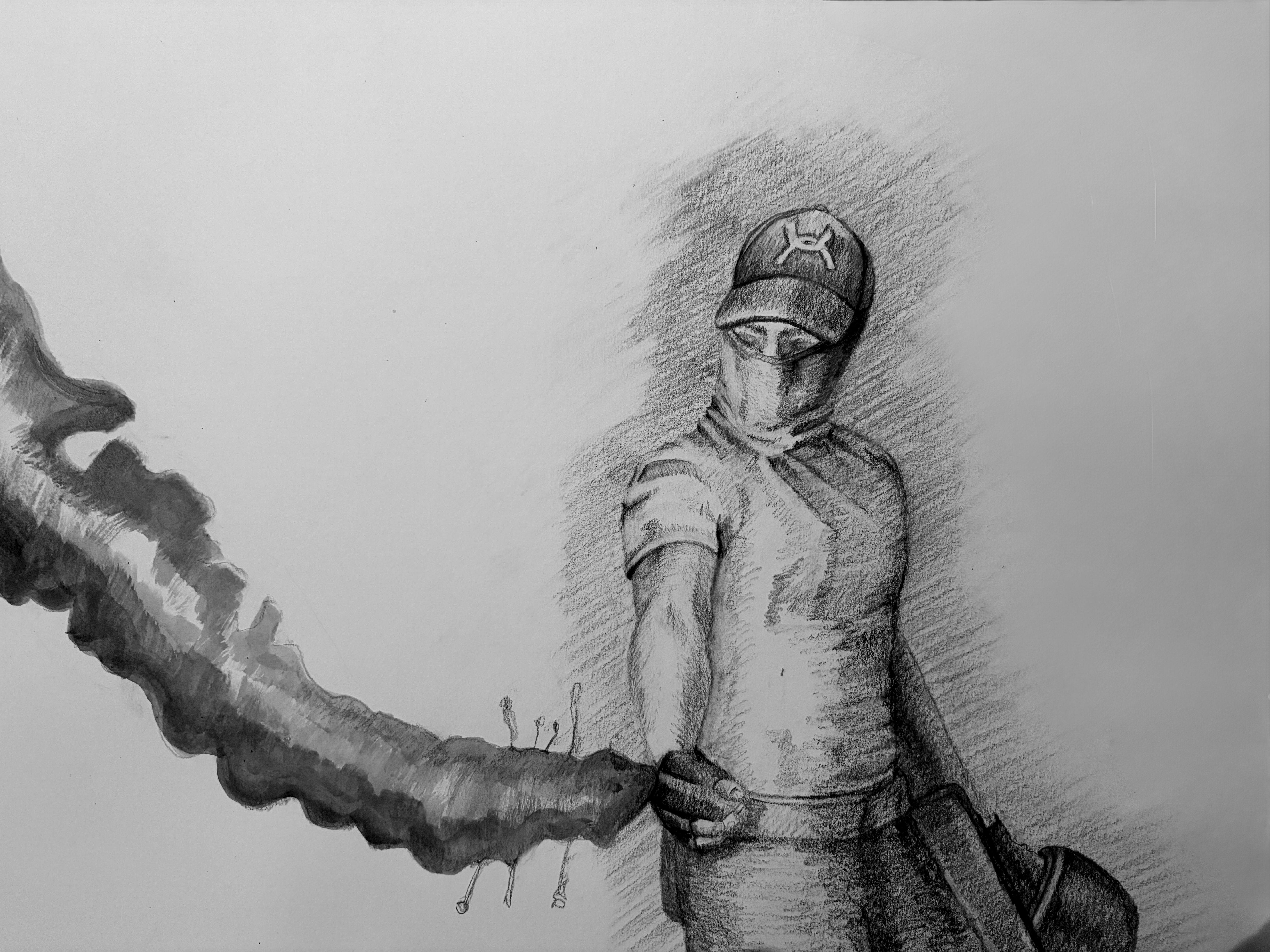
The European Parliament on Wednesday approved a new EU law allowing the infamous, almost unspeakable word: remigration. The first time I heard it, I had just returned from living in a Muslim country where I was working as a journalist, wide awake at the reality of what my civilization was soon going to face. Many were confused as to why, despite these anti-immigration sentiments, I was not a vitriolic hater of Muslim immigrants or why I wasn’t a Zionist.
The reason was simple: Because I learned something from this culture, and while I was working for the media companies in the Arab region, I had the opportunity to understand who was funding which cause and why, and the power dynamics forging the Middle East, and by extension, the Western world. I was reading the anti-Islamic Italian journalist Oriana Fallaci while I was there, and I could resonate with what she was arguing, but (as a rather stereotypical precursor to the Boomers), I thought her views on the West were fundamentally limited.
Fallaci believed our civilization was worth defending because of individual rights, sexual liberation, and secularism - that didn’t sit right at all. I was born and bred in the most toxic, hedonistic high-class elements of that world. It was why the West was decaying so rapidly; there wasn’t a ruling class that believed in anything, only a vulgar and self-serving bourgeoisie, a dead aristocracy, and an urban sub-class of a proletariat that lived in the most dehumanizing, brutalist post-industrial conditions. In the Muslim world, I came to know simple people who spoke about God daily, who believed in their tribes when no one else did, whose society held youthful energy, a strong sense of generosity and hospitality by their elderly who still prepared meals for their families; all of them were taken care of in their large homes. There was something profoundly genuine about it, even if they performed summary executions among rival militias the next day. They welcomed me into their homes, often leaving me their spare bed, while it would be hard to find an estate agent to lease you a one-bedroom neon apartment in a Western city. Don’t get me wrong, when I worked with my Arab bosses, I argued with them routinely because they couldn’t stand an opinionated woman; I quit, or they fired me. However, on a human level, I noticed a healthier civilization.
Perhaps it’s hard to articulate such feelings into words, but you can still respect and admire your enemies. The Muslim world, paradoxically, cured me because it was still immune to post-capitalist sterility and decay. However, given that I don’t feel prone to developing Stockholm syndrome, I couldn’t consider converting. Instead, I wanted to convert my own people to curing themselves. I didn’t become a Zionist because I understood that hating one another was just a self-serving agenda by Israel, and because I genuinely felt for these people and observed their pain in front of their powerlessness as their hometowns became ravaged by wars, and captive to interests that sought to make them become another version of us.
I remember starting to write edgy political essays for obscure magazines about the rise of neofascism in Italy, like this one. I was embedded with these militant far-right groups who took care of me, but I didn’t join them despite their insistence. Their priority was, of course, remigration, which I agreed with, but not because I hated all immigrants; I hated our elites more. I understood, by visiting migrant camps, how many of these immigrants were victims of the same system and were benefiting from it because it was handed to them by us. They fell prey to human trafficking rings that sold them a false dream of Europe, of obscure NGOs that pretended to have their best interest at heart when their primary mission (funded by Soros) was simply to disintegrate Europe, and were propelled to enter by our own open-border policies. They were expected to integrate into a culture that didn’t even know what it stood for. Many second-generation Muslim immigrants, for these reasons, were radicalized because of the spiritual vacuum they experienced in the West. I could see why. I thought remigration was only curing a symptom of a much deeper, festering wound in our society.
The European Parliament approved the law aimed at speeding up the return of migrants with no legal right to remain in the EU, thanks to backing from centre-right and “far-right” political groups. A once entirely taboo topic, when closing down the borders was barely on the table, now remigrating migrants who are illegally here (though we need to address many of the legal ones too) is accepted as the new normal in one of the most ideologically hostile institutions in Europe. That’s a big step forward.
Will this solve all our issues? Imagine Europe not having to worry about being demographically replaced, no more illegal immigrants, and even legal ones require more rigorous background checks, and those who remain are a minority who appreciate and love us. I know this seems like a final solution to many right-wingers, but is it? Would this address the sense of alienation and emptiness that so many young people feel? Is the cost of living crisis that is leading us to have no more families going to be solved? The vacuum in spirituality - how will that be filled? In short, what are our values, and what is the life mission of our civilization? Where’s our North Star?
The reason mass immigration was allowed in the first place was because of these compounding factors: dreaded nihilistic indifference over our past, a sense in our youth that being a criminal is “cooler” than being studious or ambitious, an ageing population we can’t afford to sustain with a suffocating pension system, the afterlife being stripped away from daily conversations, and an unwillingness to define our collective mission as a people. This is why I don’t join these National Conservative TM conferences anymore, where speakers go on stage to shout, “Europe should be White!” Applause. Groundbreaking, thank you for your contribution.
If this deeper crisis of meaning were addressed, keeping our borders open to the rest of the world wouldn’t even be a question because we would want to protect each other, motivated by a sense of self-worth. The backlash in Northern Ireland is one of healthy rebellion. The fight is now inevitable, but to win, we are required to do something more profound than simply remigrating. Winning a war entails understanding the fibre of who we are and what our purpose is. That requires positive, forward thinking that is far more challenging than animosity and scapegoating.
There was a video of a Rabbi online talking about how the “goyim” are only thinking about the next football match, holiday, drinking with their friends, and that for this reason, they were fundamentally not on par with the Jewish people. I can’t disagree with this statement because it’s too painfully true, and it’s why our society is characterized by passive indifference rather than meaningful action. The true test of the strength of a person is whether they react to defend themselves. To do so, they need a why to live. Viktor Frankl paraphrased Nietzsche when he said, “When you have a why to live for, you can tolerate almost any how.” Letting things slide is corrosive and allows more of the same troubling behavior to continue. Appeasement only takes place when a soul has been fundamentally stripped of its sense of dignity and duty towards oneself and those it loves.
Suppose we become demographically like Japan - what then? How do we understand what our collective purpose is? That is where the true mission lies.
Alessandra Bocchi is editor of Alata Magazine and artist at Painting Life.
One of the most important distinctions in this debate is the difference between a symptom and a cause.
Mass immigration may be the symptom.
Civilizational exhaustion is the cause.
A confident civilization does not spend decades debating whether it deserves to exist. It does not apologize for its history, abandon its traditions, neglect its families, and then act surprised when others arrive with stronger identities than its own.
The Western Refugee insight is that demographic questions ultimately become spiritual questions.
A people that knows who it is, what it believes, and where it is going can absorb immense pressure without losing itself.
A people that has forgotten those things will struggle to preserve itself even with perfectly sealed borders.
The real challenge is not simply deciding who belongs.
It's remembering what we belong to.
Because a civilization's greatest vulnerability is rarely invasion from without.
It is indifference from those it deems compliant and exclusion of those inside who care enough to question its path.
This has been on my mind too, but very few among us want to look in the mirror and admit there is a rot inside our own cultures. They think deporting all immigrants will send us back to a golden age. It’s simply not true.