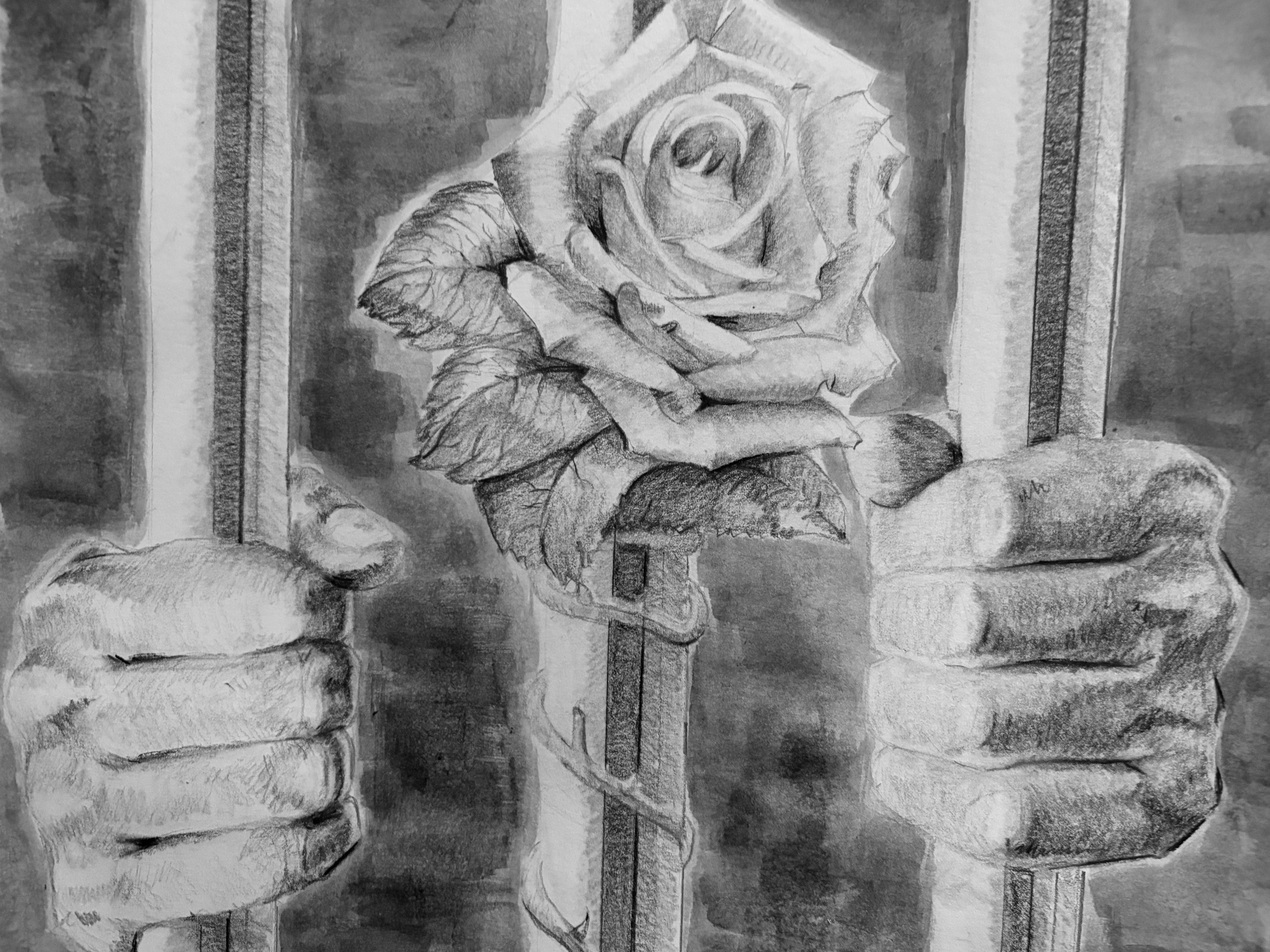
The Epstein Files: Anti-Heroes Without Heroes
Virtue has become uncool
The Jeffrey Epstein saga shows that we are living through a crisis of heroism. We are obsessed with the villains of the story - the Jeffrey Epsteins of our times, but he is missing a nemesis. There’s no hero to our story.
The anti-heroes are, as a result, viewed through a lens of mystery and allure. Even some of my friends, who are painters and couldn't care less who Epstein was, said their feeds were clogged with videos of him. Endless posts online are circulating about Epstein. What is striking is how most of the ironic ones focus not on how bad he was, but on how cool he looked. Many videos describe Epstein as “Dripstein”. His magnetism was, apparently, impossible to ignore.
In an interview, the ex-girlfriend of former “Prince Andrew”, Victoria Harvey, said:
He knew everybody who was very powerful, so if you were on the scene, and you were powerful, to be honest, if you are not on those files, it would be an insult, because it just means you are a bit of a loser … Of course, I [am on the files].
At face value, Epstein - unlike most villains portrayed in our fictional or nonfictional storytelling - is not a monstrous, marginalized figure who becomes evil because he was shunned from society. He was popular, admired, charming, and a leading member of the world's elite circles. He was well-dressed and clean-cut, with an effortless, casual style. At the same time, beneath that curated appearance, he was creating an international sex-trafficking blackmail operation that involved the abuse of children, with much more that we still need to learn.
A recent article by British journalist Jake Hanrahan on “The Sinister Epstein Photos You Haven’t Seen Yet” shows the depth of the depravity in his homes. The fact that no victims were shown leaves space to the imagination, making the viewer feel even more disconcerted. When interviewed by Steve Bannon about whether he was the devil, Epstein circled the question with wit and humor. And most of those watching aren’t sure what to make of it. They don’t respond with the kind of shock revelations that this severity and magnitude would normally elicit because they have grown accustomed to the moral vacuum.
The message here is that there is no hero we can look up to who was willing to stand up to Epstein when it mattered, except his victims, whom one would expect to come forward, and who have still hardly won. They went through a tiresome legal process only to have justice evade them before the trial because Epstein allegedly took his own life. This final act only deepened our sense of distrust about how entrenched his power truly was. His death was too much of a convenient coincidence for those he was going to expose.
For a hero in this story, we would have needed an infiltrator to hold Epstein and those he controlled accountable. But none of the figures who could have become his nemesis, who were operationally as powerful or close to as powerful as he was, did anything to stop him or his web of coconspirators and apologists. In fact, what makes the public particularly cynical now is that they all seem implicated. Even Noam Chomsky, the intellectual lion of the anti-war Left, who wrote Manufacturing Consent and who spent his career moralizing the public on the corruption inherent in modern power systems, was seen on a flight having the time of his life with the sexual offender. As a society, we’re waking up to the reality that there are no heroes to our story; we’re ruled by a hypocritical elite. The majority of those in power, irrespective of their ideology, when offered the devil’s hand, weren’t able to resist. They decided to join the corruption brazenly and without remorse because they felt certain of their untouchability, and because being part of that elite made them feel omnipotent, without realizing that it would turn out to be their biggest liability. As a result, instead of a response of condemnation and outrage, of demanding the un-redacted copies of all the files to understand who was being corrupted and why, there is a form of nihilistic indifference.
A right-wing political influencer called Emily Wilson fatalistically suggested:
Just f*cking log off, who cares? There’s nothing you can do about it. Nothing is going to happen to these people.
But this is the defeatist attitude they want us to internalize. The release of these files, and the way they’re being released, isn’t coincidental. They’re intended as a message: By making us believe that heroes do not exist, we feel we have no hope that creating a better society is possible. This narrative is being normalized to make us feel uninspired and to hide the motives of the true culprits. We’re not asking, “Why was this operation taking place? For whom or what?” Instead, the public is entertained by the sensationalism.
Epstein is not alone. Donald Trump is another figure who functions as a villain, though in a different way. Firstly, though he wasn’t an architect of this cabal, he is almost certainly implicated in it, and even his most ardent supporters can’t help but concede on this point. He was part of the web of corruption until it became unfashionable. In terms of his character, Trump is admired by his supporters because of his tenacity - because he refuses to back down. But he is hardly a selfless or virtuous hero in the traditional sense of the term. He’s an anti-hero, too; an elitist with a feral instinct and an opportunist who understood that to become President, he needed to tap into the needs of the disaffected masses. Many understood this reality and supported him regardless because he acted as a vehicle for a cause that was larger and more profound - a national awakening. Progressives opposing Trump aren’t heroes, either; they have now become objects of mockery in the online public square and dismissed as unworthy of attention.
There is something more sinister taking place with these files. It’s not just that there is no hero in our story. It’s how this narrative makes us believe that the traits of traditional heroism that have marked our civilization are boring and “uncool”. We are living in a de-virtued society.
The American actor and comedian, James Belushi, said:
Heroes are not born - they’re cornered. Oh, I was cornered. And I found out that I was no hero.
Heroes are revealed when circumstances pressure them to do what is convenient for themselves, but out of principle, they decide to act differently. Today, such persons would most likely be deemed “stupid” for not pursuing their self-interest.
The concept of heroism is, however, a complex one. Jesus Christ is considered an ultimate hero because he selflessly died for our sins. But philosophers who are critical of Christian morality, like Friedrich Nietzsche, suggest that he represented a “slave morality”; a form of self-flagellation antithetical to classical heroism, which requires the pursuit of glory. The French statesman, Charles Maurice de Talleyrand, said:
Love of glory can only create a great hero; contempt of glory creates a great man.
This is only partially true. The willpower to do good is a necessary feature of heroism. That requires being dangerous, but channeling it in the right direction. Heroism must imply this potential, or it results in harmlessness, which is devoid of the power to stop evil. This isn’t just a utilitarian understanding of heroism; it’s based on classical virtue rather than deontological ethics. Heroism requires a degree of willpower that can result in glory. The key difference, however, is that glory shouldn’t be pursued for its own sake, or you end up with another Jeffrey Epstein. Glory is relative because it implies fame, and fame can come from notoriety as well. In the classical representation of overt heroism, glory can be part of the pursuit, but as a means to an end. Julius Caesar, to date the most effective political and military leader in history, pursued glory for the sake of transforming a struggling Roman Republic, not merely for himself. He was viewed as a hero by the populace, the soldiers, and plebeians, but was viewed as a dangerous autocrat by the Senate and corrupt elite, who eventually organized his assassination.
Glory can be heroic, but it is neither necessary nor sufficient to result in heroism. The covert hero, for example, does not seek glory by wanting to receive praise and is uninterested in the pursuit of fame. In modern comic books, heroic figures hold the willpower to correct injustices, but they act in secret. Perhaps their figures were too idealistic to exist outside of fiction, but their narrative shaped the collective psyche in popular culture until recently, especially among children. Fictional characters like Batman, Spider-Man, and Clark Kent have been built around this utopian conception of heroism. They were heroes because, by working undercover as vigilantes of the night, they did what institutional justice failed to do for innocent victims. The fact that they were covert heroes made their characters more compelling because they were uninterested in the admiration, and even though they were complex figures who committed a variety of sins, they were motivated by the desire to do good.
Neither overt heroes representing classical virtue nor covert heroes from our fictional icons exist today, whether in our reality or in contemporary literature and film. To take an example, in the most popular political TV shows today, like House of Cards, power is understood as an end in itself, as sadistic in nature, and devoid of any other purpose.
During these times, it’s worth understanding if we are living during a historical anomaly. The Roman poet Virgil said:
The noblest motive is the public good.
This statement remains true. But as fiction writing is barely surviving today, Hollywood hasn’t produced an original, awe-inspiring narrative in a while, and our political reality is defined by endless corruption, we are living in an age of anti-heroes without heroes. This narrative is intentional, permeating both high and popular culture. It makes us believe that resistance is futile because we would have all taken the Lolita Express and participated in the operation if given the chance, and that is just how the world functions. But it isn’t, and that plan was orchestrated for a reason they would rather we not fully grasp.
The good news is that “nature abhors a vacuum”. A society needs aspirational figures to feel hope, and the fact that we don’t have any means that the heroes of our story are yet to emerge.
Alessandra Bocchi is the founder of Alata Magazine and Rivista Alata.


In 1994, Beverly Hills Cop 3 came out.
Wait.
In 1885, “The Maiden Tribute to Modern Babylon” came out.
So thats 32 years ago or 141, take your pick. We have had this story for a lot longer than that, right?
Not even sure when 2 kings 17:17 was written.
A lot to unpack here, but so true about the lack of hero’s as well as the need to document what really happened. Nihilism cannot win in this regard. I think about a hero, St Maximilian Kolbe. A true hero. A man of deep conviction. He would be so easily dismissed by these morally repugnant people whose names appear in the files. They aren’t worthy enough to even say his name.
The world is a dark place, but only if we let it be. Dragging truth into the light. Why does it take independent journalists and common citizens to fight so hard? Don’t bother answering, we all know why, now who will do something to change it?